 Eduardo Roxius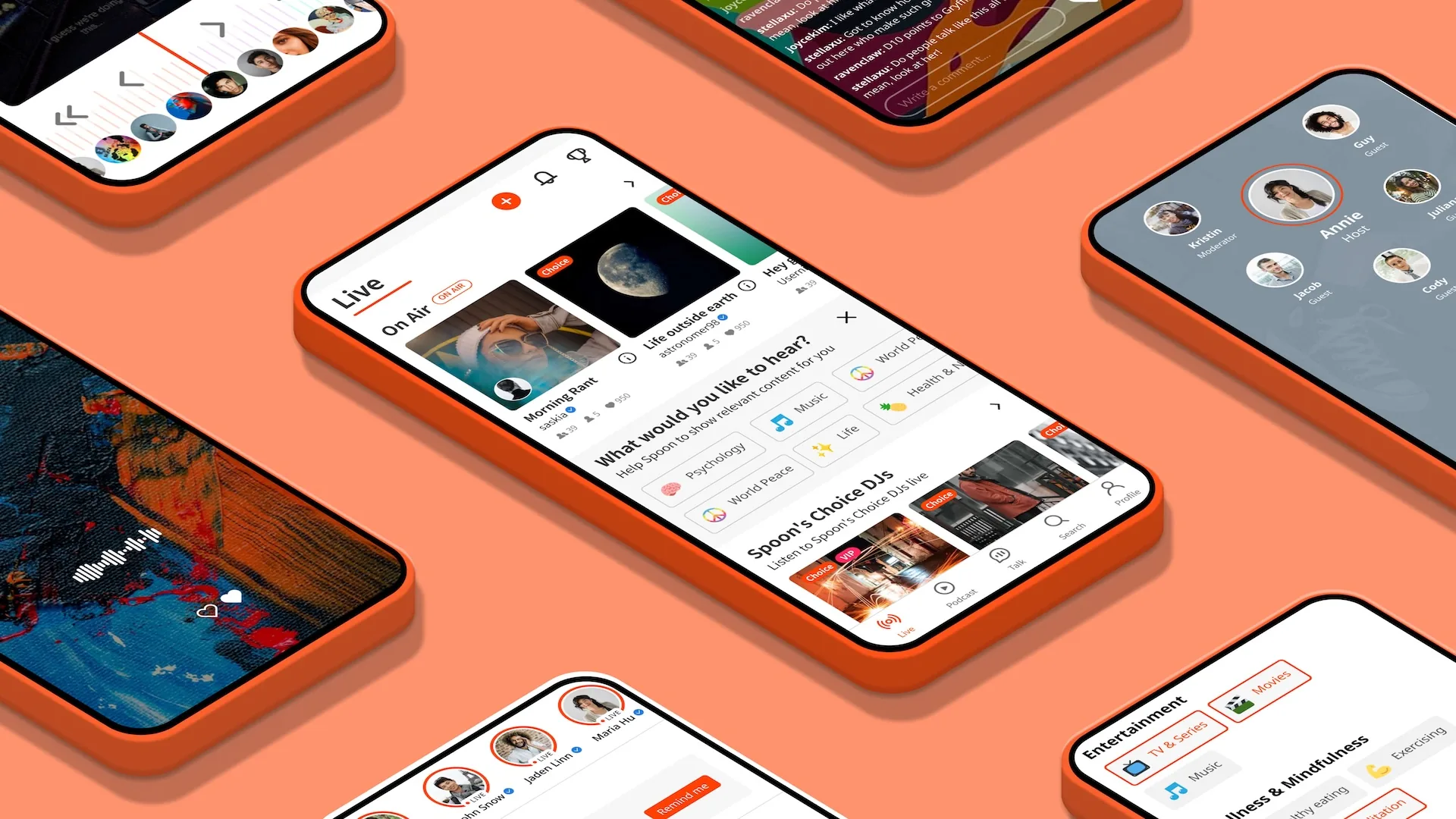
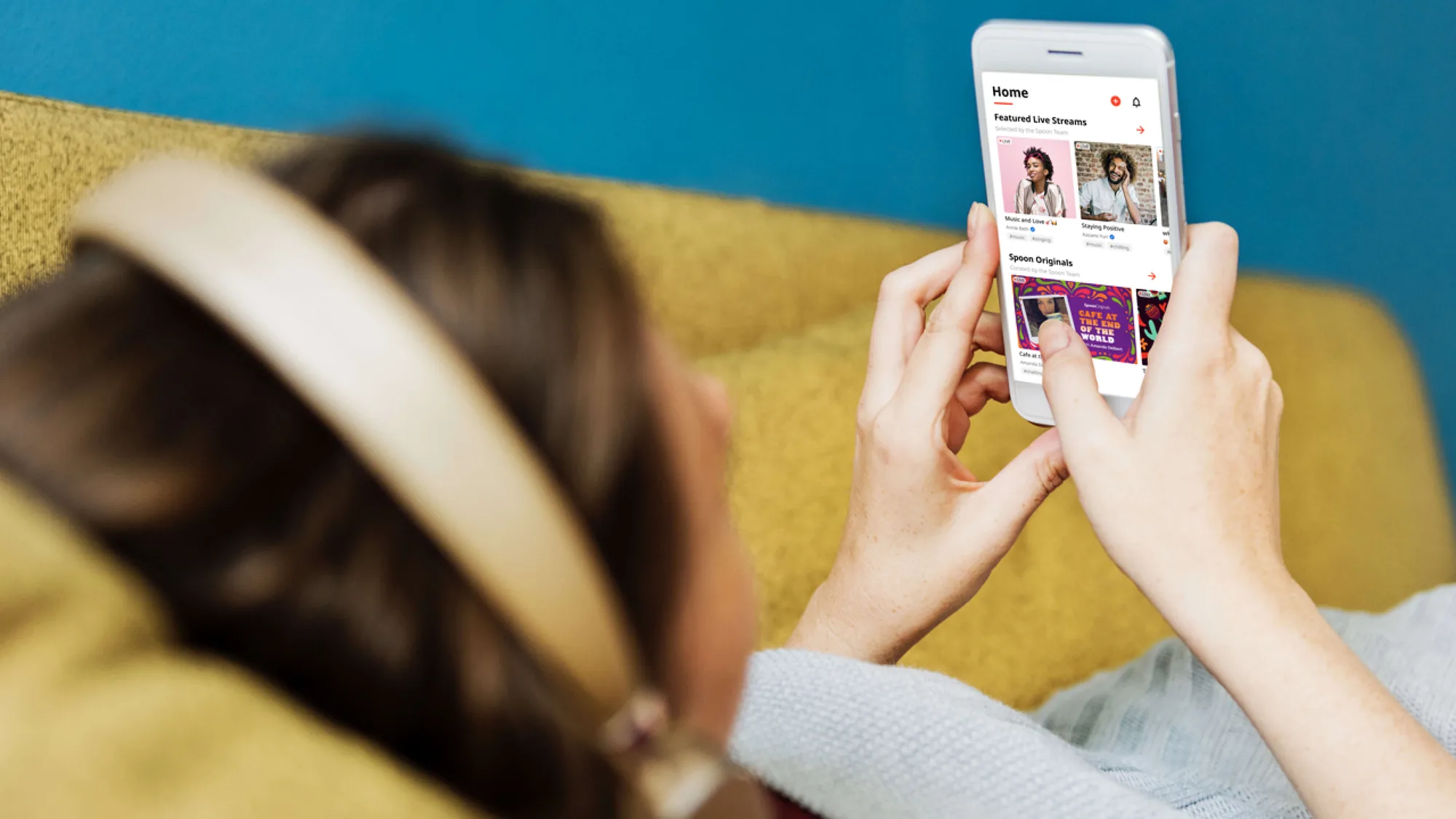
Spoon Radio is a live audio platform built on a simple premise: “live stream without a camera.” To maintain its competitive edge, the team wanted to explore new ways to engage their community and empower creators.
Spoon partnered with Daylight not to just design features, but to establish a culture of experimentation. We worked together to ideate, prototype, and test new concepts with users before engineering began.
As a UX Designer at Daylight Design, I led the prototyping, research, and strategy workstream. I partnered closely with Spoon Radio’s internal design team to run tight iteration cycles, validate direction with users, and align on what to build next.
Working with Daylight made us realize what a powerful resource a good UX design leadership can be. After this experience, we are now looking to hire a Head of Design.
Neil Choi, CEO, Spoon Radio
The challenge
- Innovation vs. riskThe team wanted to be bold with new social features but needed to know they would actually drive engagement, not just add clutter.
- Speed at scaleSpoon releases weekly. They needed a design process that could keep up with their engineering cadence without sacrificing quality.
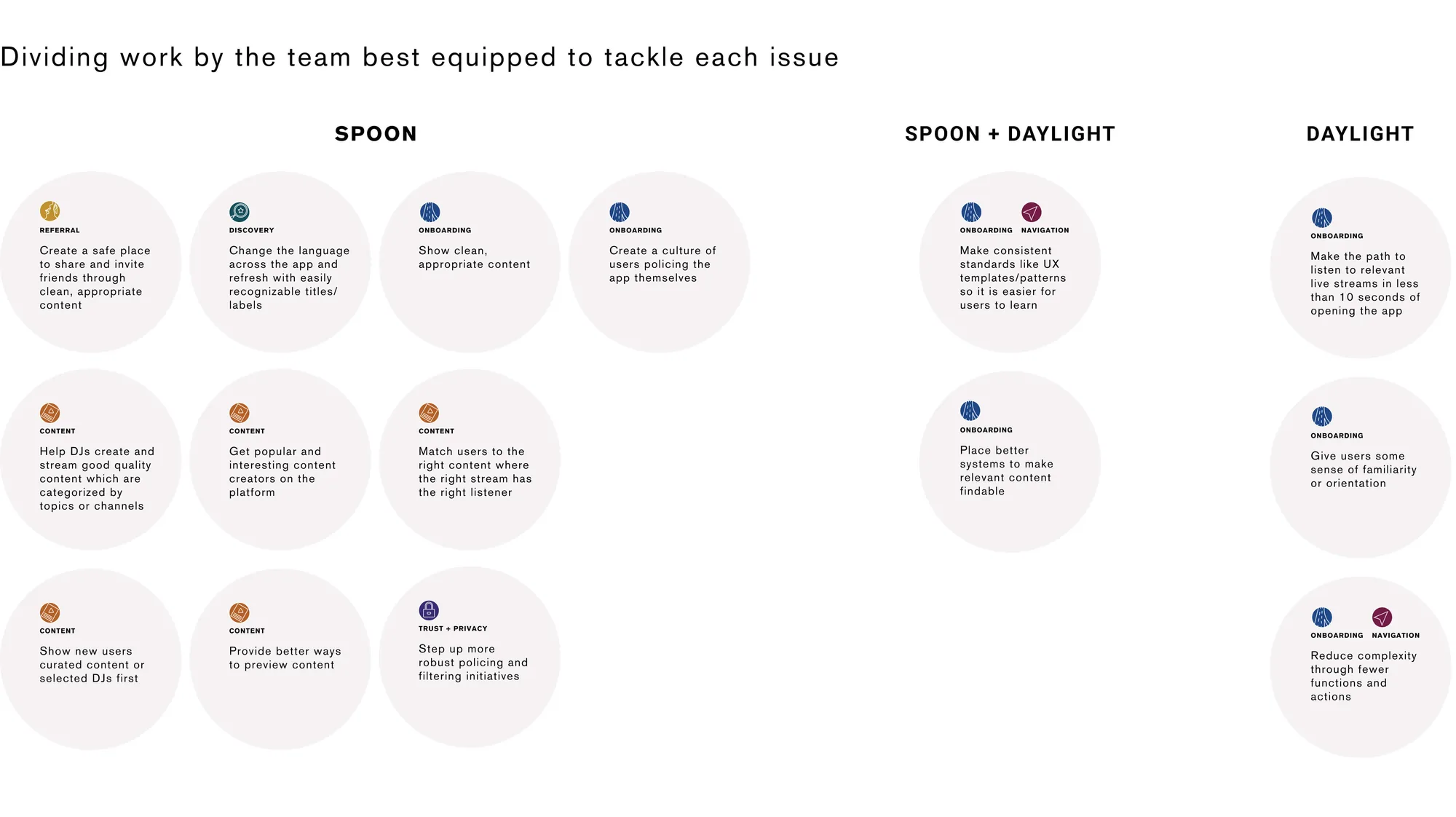
- Breaking silosWe needed to bring product, design, and engineering together to make decisions as a single, unified team.
The approach
-
 Collaborative ideation
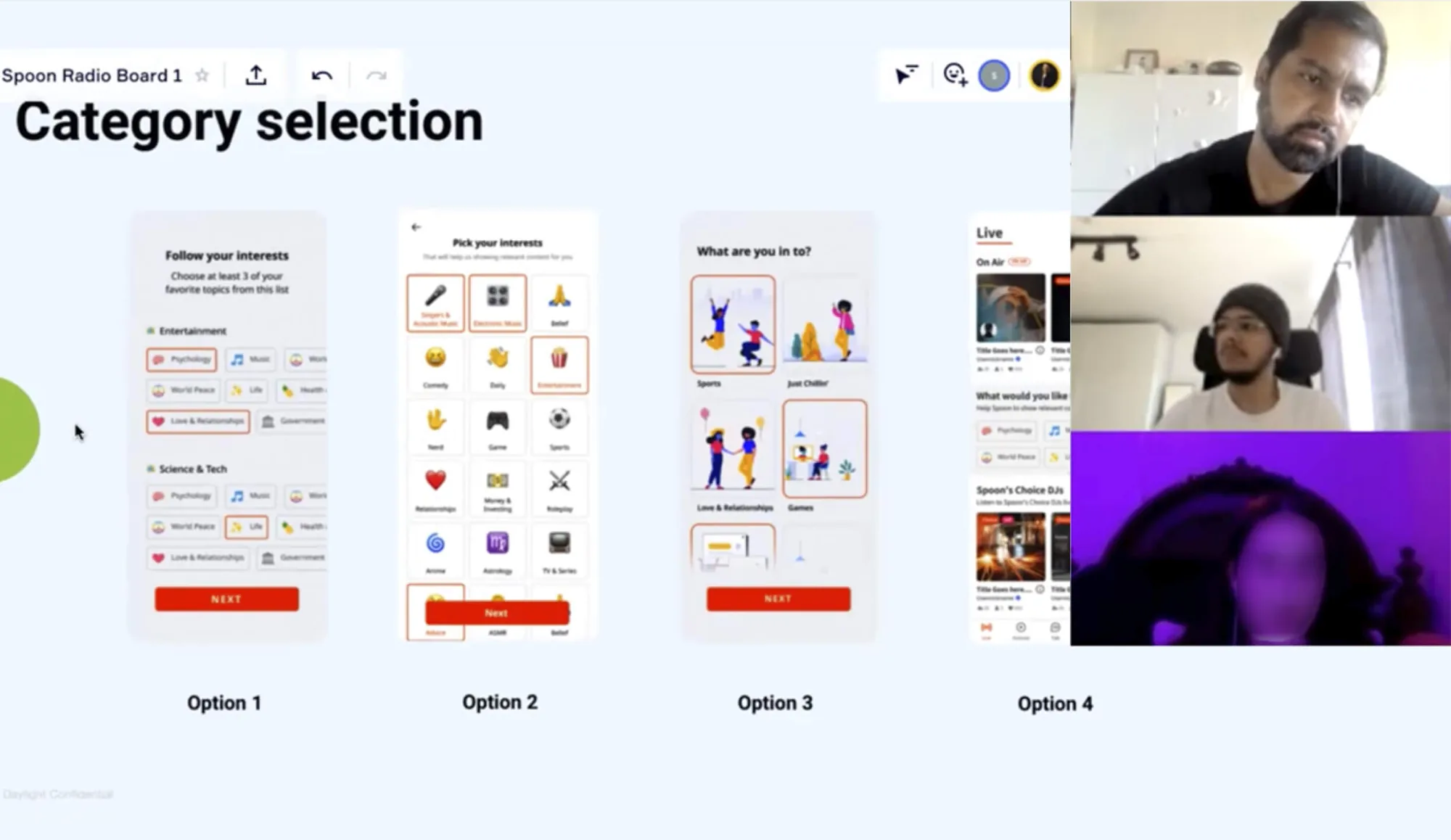
We moved away from “reveal” presentations. Instead, we held co-creation workshops where stakeholders sketched and brainstormed alongside us.
-
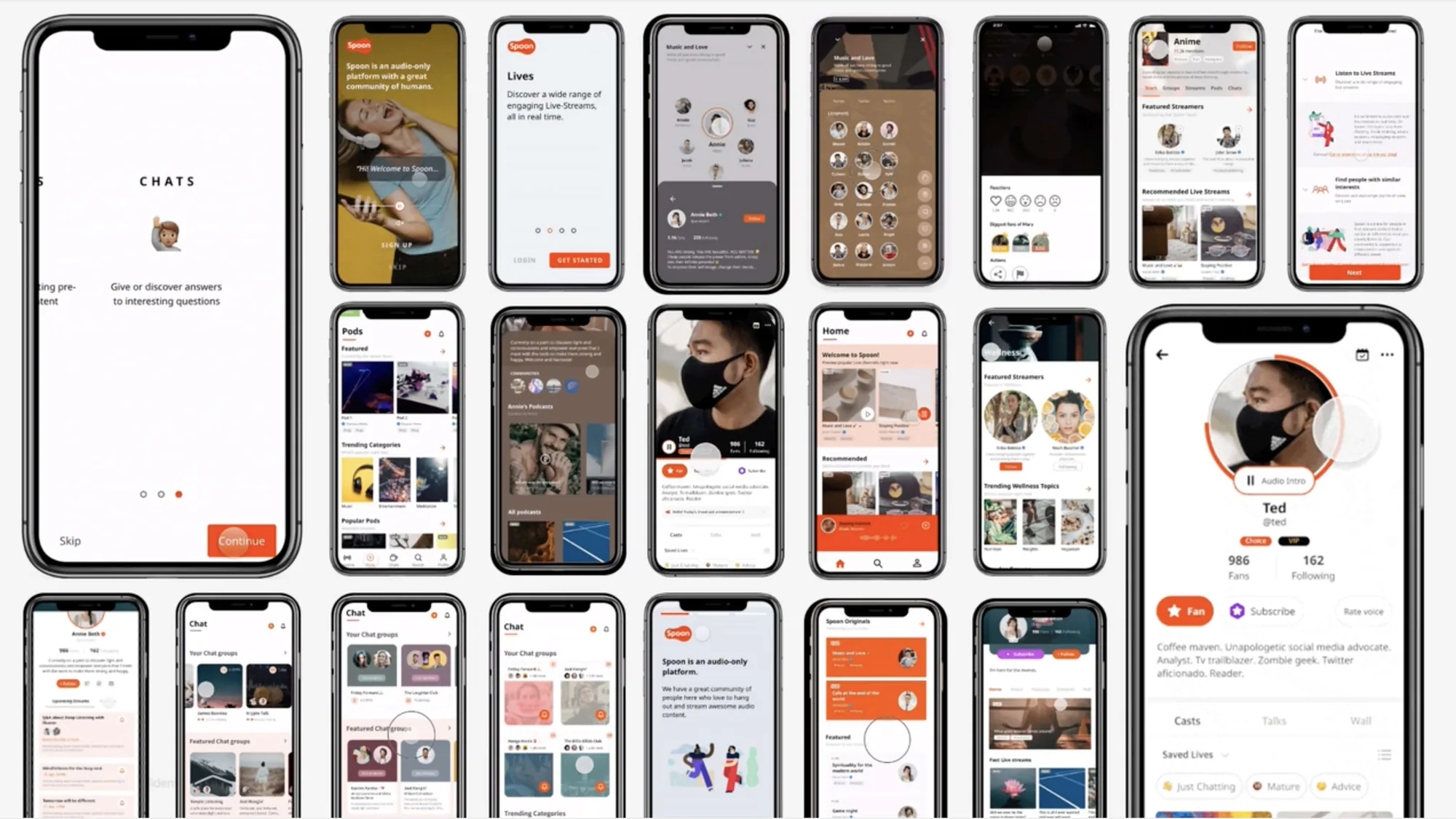 Prototyping as a language
We built around 75 clickable, high-fidelity prototypes to simulate new interactions. This allowed the team to “feel” a feature before it was built.
-
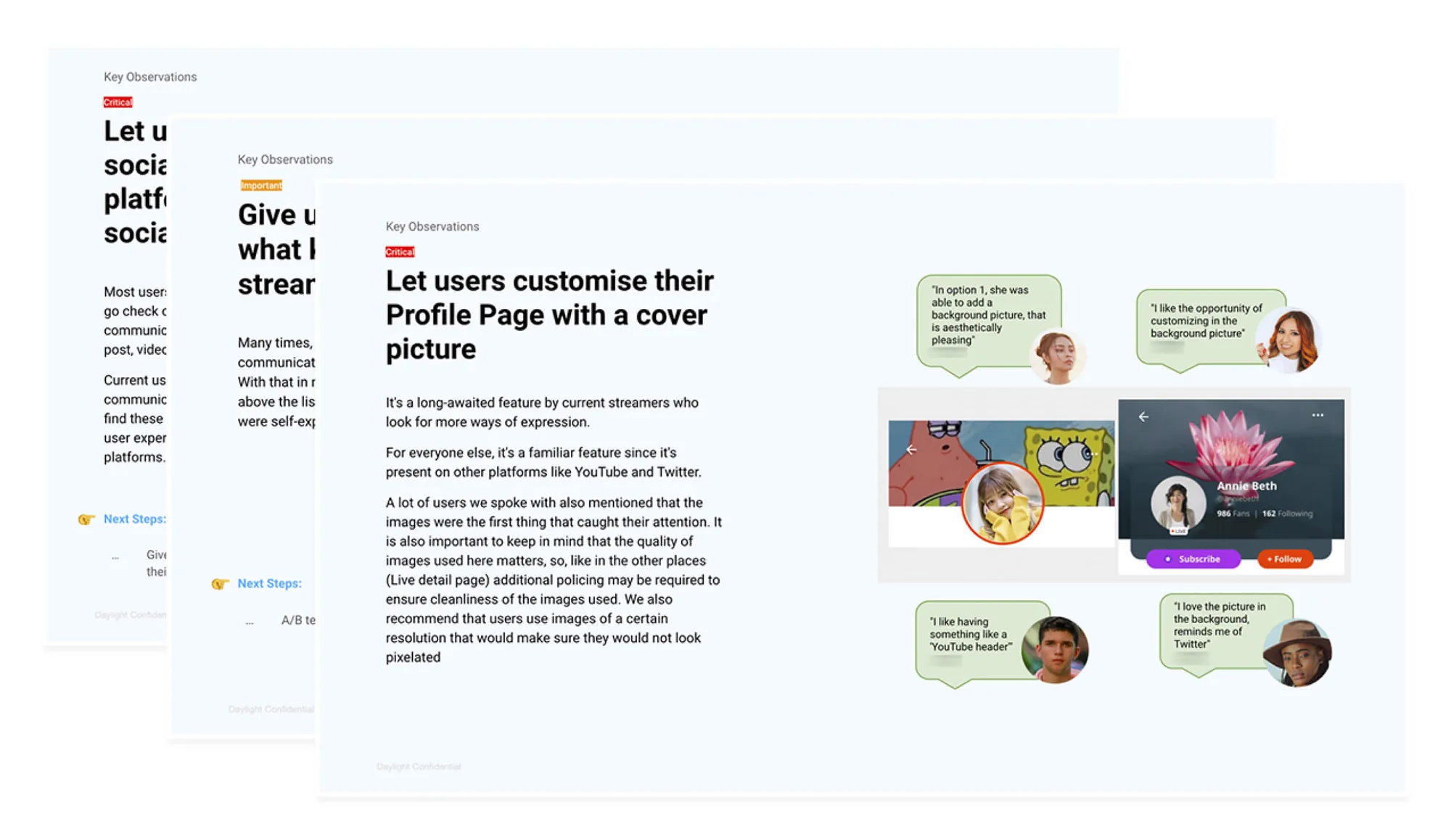 Rapid user testing
We put these prototypes in front of users every sprint. We didn’t ask “do you like this?”, we watched how they used it, what confused them, and what delighted them.
Impact
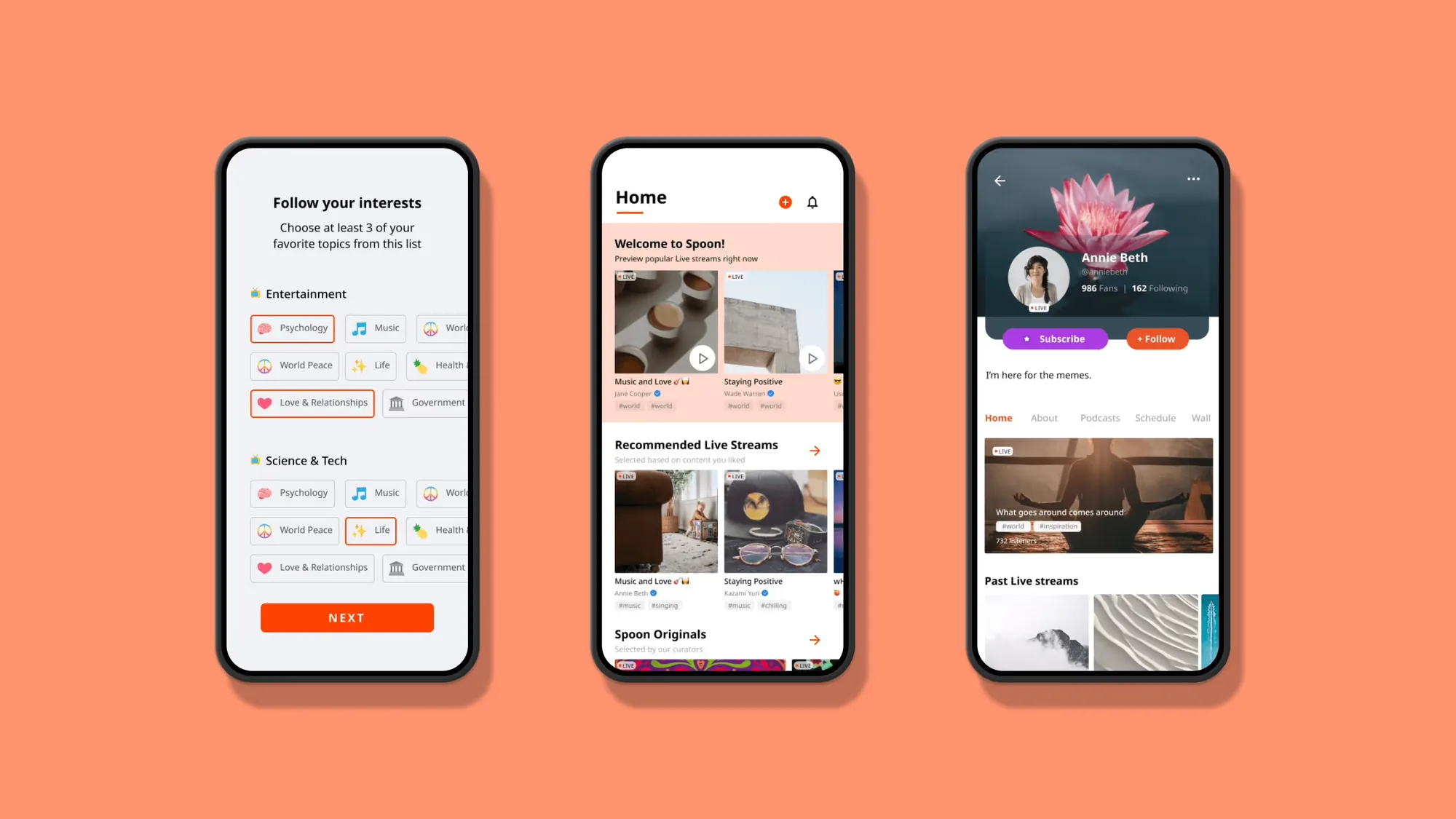
Decisions about what to build moved from opinions to what we saw in user tests. After the engagement, Spoon Radio set out to hire a Head of Design.
- +350%Daily listens (week)
- 2×Listening time
Reflection
- What I learned
At Spoon Radio, the role of design was to facilitate better conversations. By making ideas tangible early, we bridged the gap between business goals and user needs.
- What I’d do differently
I’d push for even tighter integration with engineering earlier in the prototyping phase to catch technical constraints before testing.